by Nick Lane
#reading #tag:biology
The Questions
I’m reading the excellent book The Vital Question by biochemist Nick Lane. He asks why all complex life on earth, from amobeae to man and everything else in between shares certain characteristics, among which are cellular architecture, sex, ageing, and an irreducible complexity. He argues that these “universals” cannot be explained by genetics and natural selection alone, and he asks why complex life has these characteristics rather than rather than some others. To be specific, consider the eukaryotic cell. These are the cells of complex organisms such as amoebeae and humans. All have a nucleus, a distinctive cell membrane, and mitochondria. The latter, sometm generate ATP (adenosine triphosphate), the cell’s usable energy currency. Bacteria and Archeae (see below) have none of these features.
He observe that life on earth has certain universal characteristics, among which are cellular energy systems, sex, ageing, and complex cells. For now, let’s think about complex cells. Thse are cells with a nucleus and a whole package of features which includes endosymbionts such as mitochondria —
life’s origin and evolution around the central role of energy
Some Background
Contrary to what I learned in school, we now know that all life is divided into three domains: Bacteria, Archaea, and Eukarya. Members of the first two groups are single-cell organisms. Members of the third may be unicellular or multicellular. The domain Archaea was discovered in 1977 by Carl Woese and George E. Fox [WF1977]. They analyzed 16S ribosomal RNA sequences and showed that certain prokaryotes (then called archaebacteria) were fundamentally different from typical bacteria. This work demonstrated that life did not divide simply into “prokaryotes vs. eukaryotes,” overturning a core assumption of biology. At this point, Archaea were recognized as a deeply distinct evolutionary lineage, but not yet elevated to “domain” rank. This happened in 1990 with reference [WKW1990]. The differences between the three domains was not just genomic because Archaea have:
- Distinct membrane lipids
- Unique transcription/translation machinery
- Evolutionary ties closer to eukaryotes than to bacteria in key systems
- This discovery reshaped evolutionary biology, microbiology, and our understanding of early life on Earth.
Notes
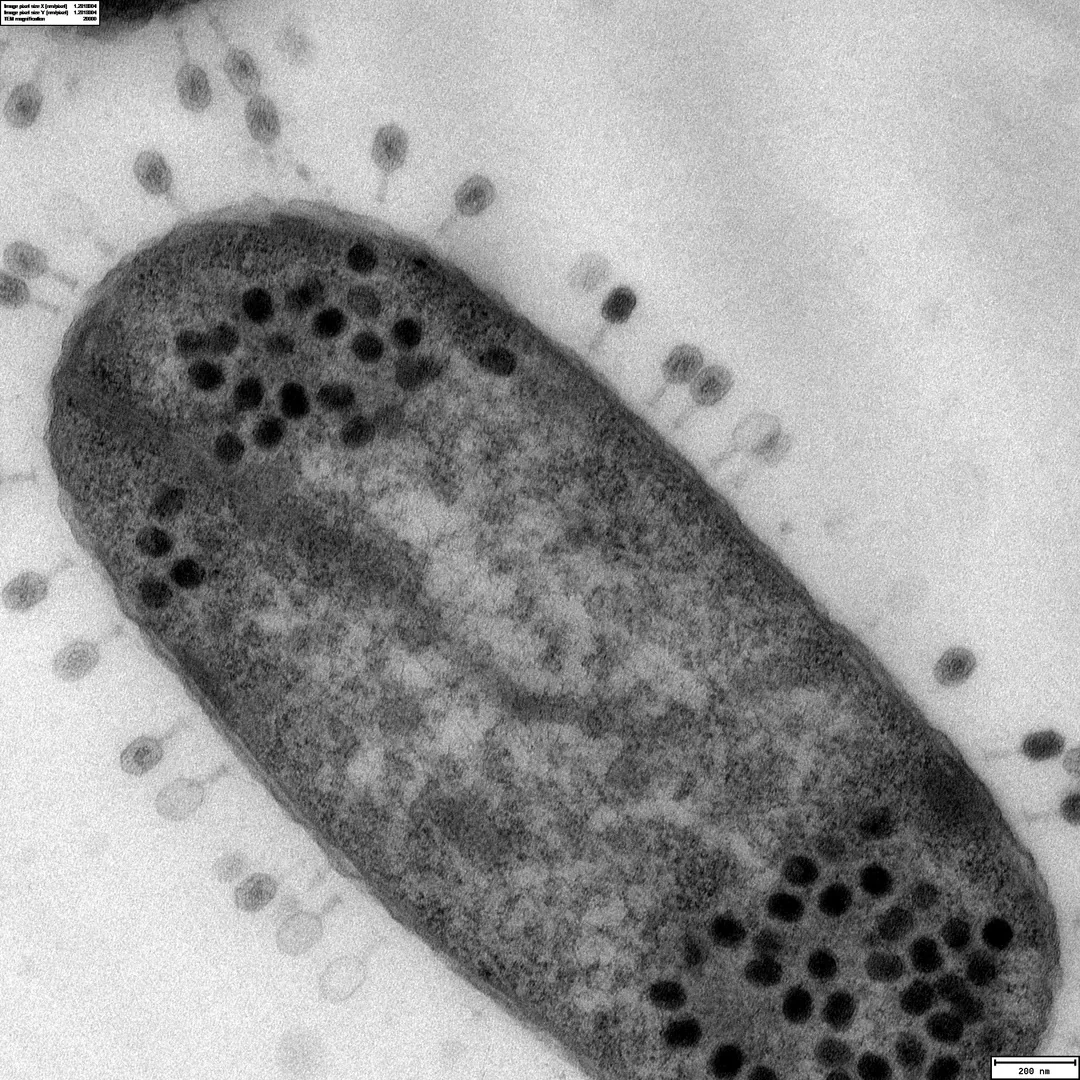
- The Bacterium+bacteriophage image: reddit, sci_bastian, op. I took this image with a 200kV transmission electron microscope. This is a 65 nanometer epoxy resin section stained with uranyl acetate and lead citrate. The black round objects inside the bacterium are phage particles assembling in the infected bacterium. Virophile: I dunno, looks like a T4-like phage. Lots of them destroy all the host DNA during infection, so weirdly not the best setup of HGT (horizontal gene transfer).
- Archaea-1 link
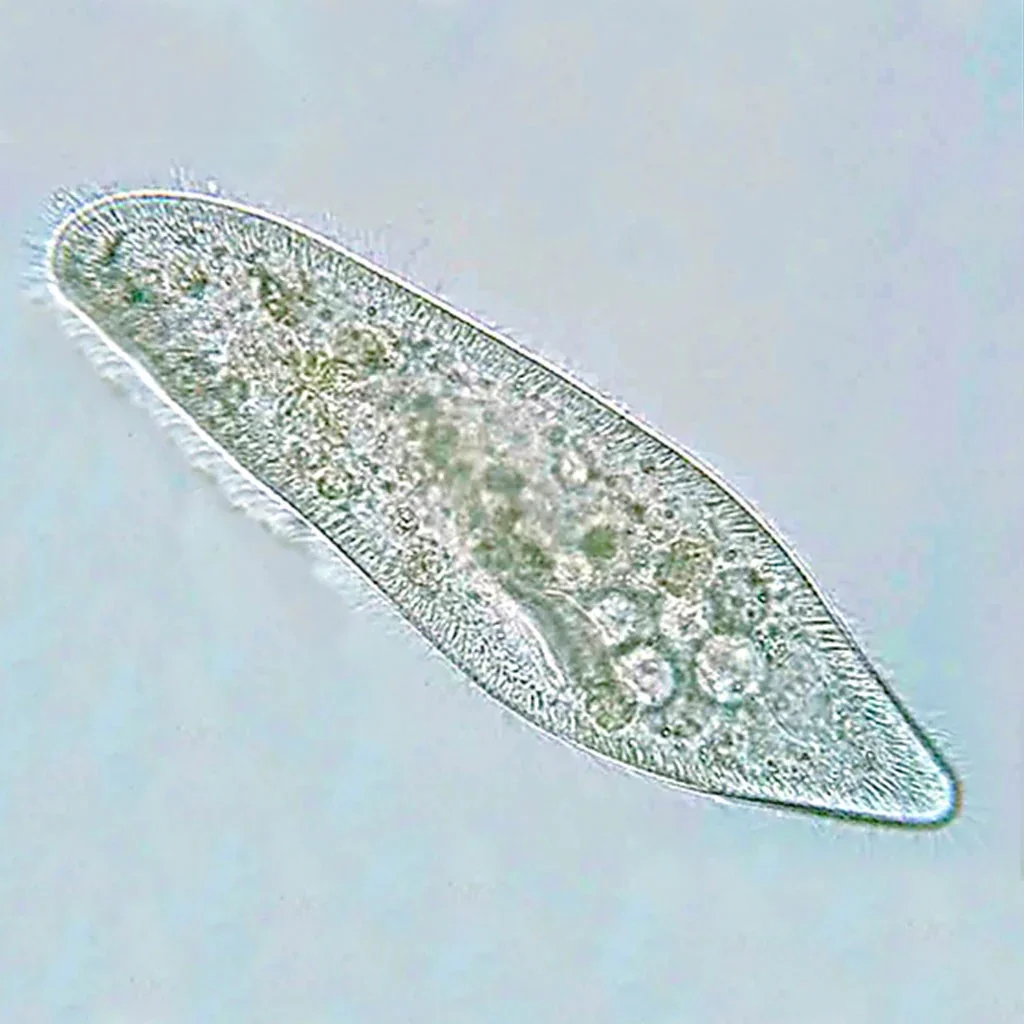
- Endosymbionts in Amoebae labroots
References
[WF1977] Woese & Fox (1977), “Phylogenetic structure of the prokaryotic domain: The primary kingdoms”
[WKW1990] Woese, Kandler & Wheelis (1990), “Towards a natural system of organisms: proposal for the domains Archaea, Bacteria, and Eucarya”