jxxcarlson's website
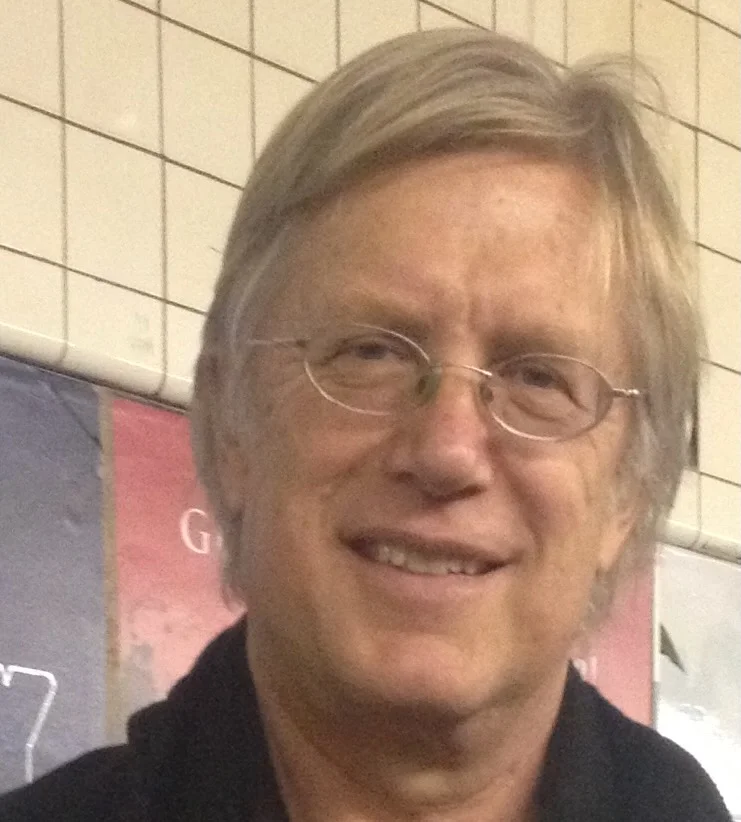
Signposts. I’m from Lewiston, Idaho. BS in Mathematics from the University of Idaho. Ph.D. under the direction of Phillip Griffiths at Princeton University. Professor of Mathematics, University of Utah where I was department chair 1995-2002. Last job, (2003-2012) President, Clay Mathematics Institute.
Now. I’m now retired, living in New York City, doing all those things I had little time for before. (Love it!). From 2012-2025 I went to BICMR (Beijing International Center for Mathematical Research) most years for a month to teach — usually algebraic geometry and Hodge theory, but occasionally, audaciously and perhaps foolishly, a little bit of physics and type theory. The students were a delight to teach.
In Beijing I usually ate dinner at a hotel near my apartment. The staff got to know me, and would always address me as “teacher.” This token of respect deeply touched me. In China (or in Europe), I have never heard the sentence “Those who do, do, and those who can’t, teach.”
About those things I had little time for before I retired, two stand out: writing code (the Scripta.io project) and musical composition. I had messed around with occasional small coding projects ever since the summer of my first year at the university of Idaho. Around 2013, I discovered something new (for me): the world of typed functional programming. There I found community, both socially and intellectually, and a new circle of friends. I have worked with that language genre ever since, mostly with Elm and to some extent with Haskell.
About music, I’ve dabbled in it for years, despite having had no musical education as a child and a poor one as a high school student. Around 2008 I started taking c composition lessons with George Oakley, a New York City composer from Tblisi, Georgia. What I loved about those lessons is that from the very first George had me write music. It was a good idea. I don’t think I could have survived even a year of counterpoint and harmony exercises without getting into the “real stuff.” It was very, very, slow going at first, indeed for a long time. But it was rewarding, and looking back, I realize that I did make progress. On December 6, I organized a small concert at Klavierhaus in New York City featuring work of Alkan, Fujikura, Hailstork, Poulenc, Rebikov, Villa-Lobos, as well as work by George, composer Lora Al-Ahmad, and myself. It was a small space, but we filled it. I am now working on a piano trio (piano, cello, and flute), my first attempt at three-part writing.
Mathematics, selecta
I am indebted to Ruth Modie, my mathematics teacher at Lewiston Senior High School, with whom I studied for three years. My senior year she gave me a mimeographed list of mathematics books, and added that I could study them in the back of the classroom if I kept up with my schoolwork. This simple, thoughtful gesture changed my life.
I studied three of the books, What is Mathematics, by Courant, An Introduction to the Foundations & Fundamental Concepts of Mathematics by Eves and Newsom, and Calculus, also by Courant. I studied the latter diligently: in those days calculus was not taught in high school, or at any rate not in my high school.
I am also deeply indebted to my thesis advisor at Princeton University, Phillip Griffiths.
When I went to graduate school, I knew that I wanted to do mathematics, but only much
later did I realize that I had no idea how to go about it. From Griffiths I learned
not only much mathematics, but also how to think about it. That, of course, is the most
important lesson for an aspiring researcher.
Below are listed some of the papers I wrote over the years.
- Cubic Surfaces with Special Periods, James Carlson and Domingo Toledo
- Hyperbolic geometry and moduli of real cubic surfaces, Daniel Allcock, James Carlson, and Domingo Toledo
- The Moduli Space of Cubic Threefolds as a Ball Quotient, Daniel Allcock, James Carlson, and Domingo Toledo
- Real Cubic Surfaces and Real Hyperbolic Geometry, Daniel Allcock, James Carlson, and Domingo Toledo
- The Complex Hyperbolic Geometry of the Moduli Space of Cubic Surfaces, Daniel Allcock, James Carlson, and Domingo Toledo
- A Complex Hyperbolic Structure for Moduli of Cubic Surfaces, Daniel Allcock, James Carlson, and Domingo Toledo
- Discriminant Complements and Kernels of Monodromy Representations, James Carlson and Domingo Toledo
- Extensions of variations of mixed Hodge structure, James Carlson and Richard Hain
- On the mixed Hodge structure associated to π3 of a simply connected complex projective manifold, James Carlson, Herbert Clemens, John Morgan
- The one-motif of an algebraic surface, James Carlson
This website is generated using Hakyll, a static site generator written in Haskell.